Quick Start
K9 can be powered by both Android and Linux. when Linux is in use, Like most Pi products, K9 can work in headless mode( no display connected, access via ssh ) and desktop mode( Ubuntu).
To start using K9 as a Linux interactive computer , you need to prepare the following items:
- Power Supply
- Display and Display Cable
- Boot Media
- Keyboard and Mouse
Note
If you want to use K9 as a headless device accessed via network, please refer to SSH Connection.
Power Supply
| Power Mode | Voltage/Current |
|---|---|
| DC | 12V/1.5A(1.5A is the baseline, or above) |

Display
| Interface | Maximum Resolution Support |
|---|---|
| HDMI | 4K@60Hz |
| MIPI x2 | 2.5K@60Hz / 4K@45hz |
| LVDS x2 | 1280x720@60Hz / 1920x1080@60Hz |
HDMI

MIPI_LVDS
The K9 is equipped with two MIPI_LVDS interfaces. Select the corresponding interface according to the system image version.

Boot Media
Kickpi K9 features on-board eMMC (embedded Multi Media Card). The on-board eMMC comes pre-installed with Android 13 at the factory, so no additional boot media is required. If you wish to replace the operating system or boot the system from an SD card during later use, you will need to prepare an SD card with a storage capacity of ≥ 16GB.

Keyboard and Mouse
Kickpi K9 is equipped with 1 USB 3.0 port and 3 USB 2.0 ports. You can use any USB port to connect a keyboard and mouse.

Buttons
K9 has 3 physical buttons on-board, each one has unique function, here are their usage description:
- POWER: Short press to hot reset device once.
- FEL: Located on the bottom side of the board. It is used in the scenario of installing OS Image to on-board eMMC,when pressed and hold with a power-on action, SoC's Init code will put device into MASKROM mode, cooperate with flashing tool to install Image into eMMC. MASKROM mode means cheating SoC init code into thinking eMMC has nothing programmed, even without U-boot or U-boot is corrupted and unable to work correctly. It give people a chance to reprogram eMMC after bricking it.
- USER: Programmable custom key.

System Startup
User and Password
For any Linux distro Image we released, Default user and password for different distros are as follows:
| System | Username | Password |
|---|---|---|
| Debian | kickpi | kickpi |
| Debian | root | root |
Hardware Installation
In this installation diagram, we have connected the power supply, MIPI display, mouse, and keyboard to the Kickpi K9. (If you only have the power supply connected, please judge whether the system has started successfully according to the LED status.)

LED Status Indicator
You can tell the system working status via the LED indicators.
- K9 board has two LED indicators. green LED is the power indicator, and blue LED is the heartbeat indicator.
Success
Green LED is steady on, blue LED is blinking.
Failure
If green LED is off when device is powered on, please check power supply or short circuit issue. green LED sucks current directly from DC power without any external control. If the blue LED is off or steady on(no blinking), kernel panic or died. Blinking is controlled by a kernel driver. All our released OS Image work this way: Android, Ubuntu,Debian,Armbian.
System Desktop
K9 supports Android, Debian operating systems. When our released OS images been installed, each one use different desktop wallpaper.
Android13
The K9 supports Android TV and Android tablet operating systems, and the one shown in the figure is the Android TV operating system.

Debian 11

Installing Operating System
Obtaining Image
Note
Image Naming Specification: update-t527-kickpi_k9_v1.0-android13-lvds0-7-1024-600-2025121210-v1.5.img
update: Indicates a complete image package.
t527-kickpi_k9: SoC model t527, board model Kickpi-K9.
android13: Android operating system.
lvds0-7-1024-600: lvds0 refers to the K9 MIPI0_LVDS_LCD video output interface; 7-inch LVDS display with 1024*600 resolution.
2025121210.img: Image build date.
Obtain Kickpi K9 image files from OneDrive.
├── 2-Image
│   ├── K9
│   │   ├── Android13.0_Tablet
│   │      ├── update-t527-kickpi_k9_v1.0-android13-lvds0-7-1024-600-2025121210-v1.5.img
│   │   └── Debian11
USB Installation
Preparation
Note
Installation Mode:
With the motherboard powered off, press and hold the FEL button on the back of the board (do not release). Apply power and connect the USB flashing cable. After the flashing tool detects the device (only check whether the green LED is steady on during driver installation), release the FEL button.
-
**Hardware: ** Windows PC/laptop, MIPI Display (optional), DC 12V independent power supply, USB A-to-A or USB A-to-C flashing cable (make sure the host has a Type-C port, make sure use the one capable of data exchange).
-
Software: Installing tool PhoenixSuit, image.
Installation Steps
1. Connect to a Windows computer via USB A-to-A or USB A-to-C, and set the motherboard to installation mode. The green LED will stay on.
Note
Installation Mode:
With the motherboard powered off, press and hold the FEL button on the back of the board (do not release). Apply power and connect the USB flashing cable. After the flashing tool detects the device (only check whether the green LED is steady on during driver installation), release the FEL button.

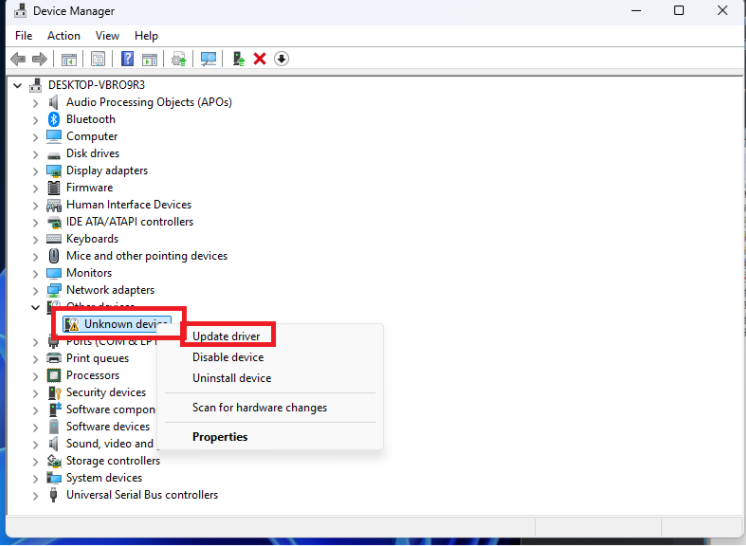
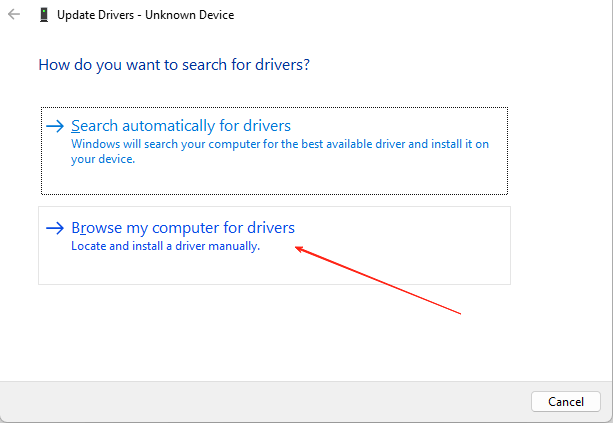
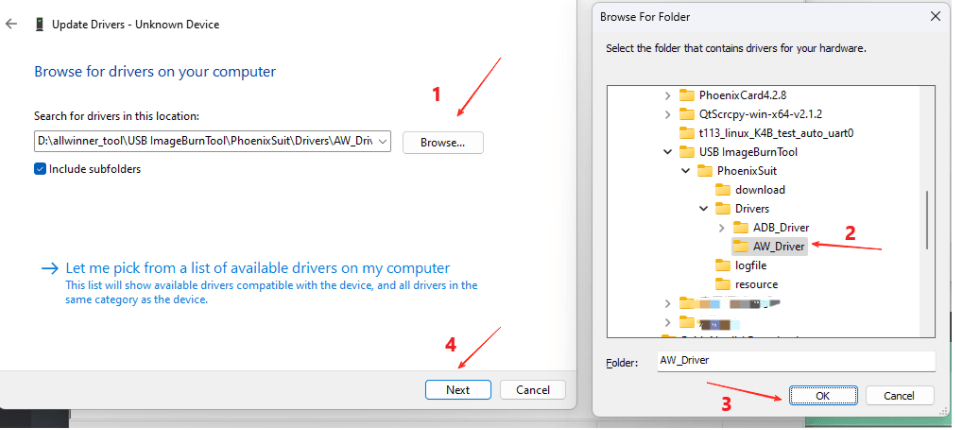
2. Install the driver, connect the computer via the USB flashing cable, open Device Manager on the computer, and operate according to the diagram.
Tip
Driver folder path: PhoenixSuit/Drivers/AW_Driver/
3. Open PhoenixSuit in the extracted folder as Administrator.

4. Launch PhoenixSuit, click One-click Flash, and select the image to be flashed (Do NOT click "Upgrade Now).
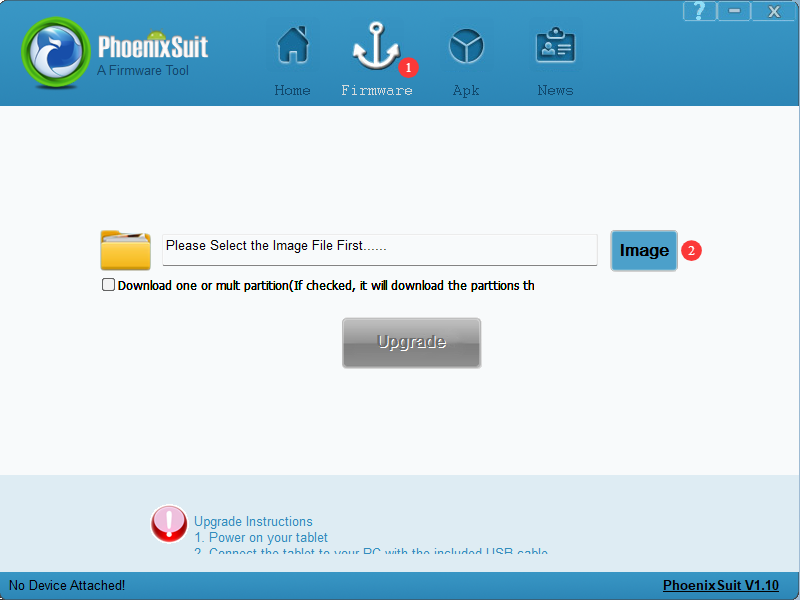
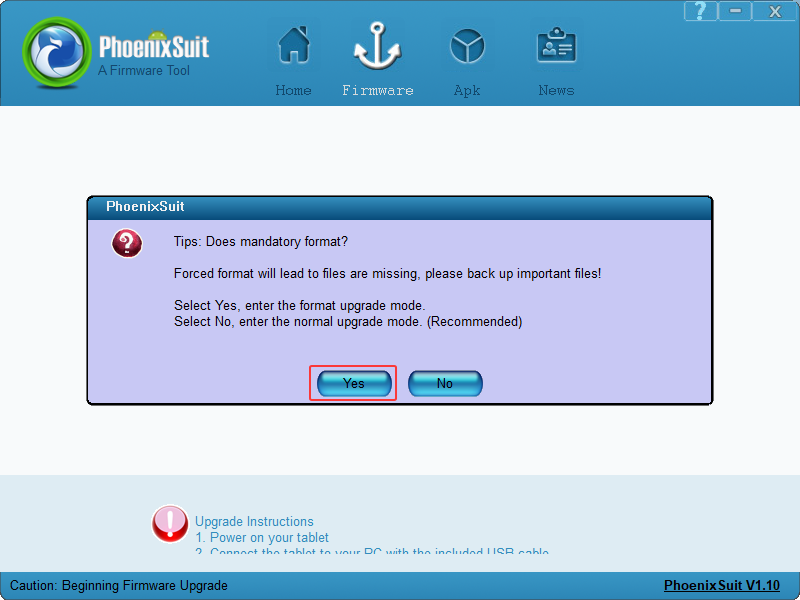
5. Make the development board re-enter Installation Mode and connect it via USB. The software will display the following screen. Click "Yes" to start the flashing process and wait for it to complete successfully.
Note
Installation Mode:
With the motherboard powered off, press and hold the FEL button on the back of the board (do not release). Apply power and connect the USB flashing cable. After the flashing tool detects the device (only check whether the green LED is steady on during driver installation), release the FEL button.
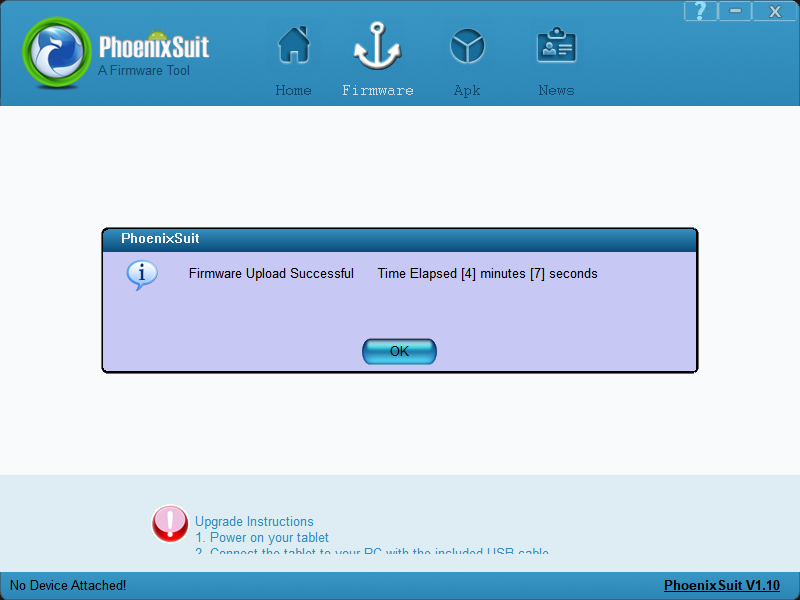
6. After the image is successfully flashed, the board will automatically reboot.
Success
The green LED remains lit, and the blue LED blinks continuously (the blue LED will not light up immediately, please wait patiently).
SD Card Installation
K9 has a SD card slot ( microSD aka. TransFlash or TF ) which can also serves as a bootable device. In K9's boot sequence, SD card has higher priority, so K9 always try to boot from SD card first, when no one mounted, K9 then boot from on-board eMMC. Since SoC vendor's official Tools use terminology SD(microSD) instead of TF, so we use SD card in this context, TF and SD means the same thing.
With SoC vendor's tool, we can make 2 types of booting card. SD Boot Card works like a portable edition OS, e.g. windows PE. We use SD Boot Card to power device for some maintain and fix purpose. also can be used to verify your own customization. the second type is SD installation card. you create this kind of booting card when you try to use it to install new Image into on-board eMMC. it contains a specific script to create partition, format FS, copy files to eMMC. Make sure you understand what you need and create the right SD card.
Preparation
Note
Supported SD card filesystem formats: exfat, NTFS
SD Boot Card (SD Boot): Contains bootloader and complete system image, supports device booting directly from microSD card, used in scenarios like eMMC, dev debugging.
SD Installation Card (Upgrade Firmware): Stores firmware image and installation script, used to install or upgrade firmware to the device's on-board storage (e.g., eMMC).
-
Hardware: Windows PC/laptop, HDMI Display (optional), USB TYPE-C cable(some cheap TYPE-C cable only provide current, make sure use the one capable of data exchange). some users reported when using double male TYPE-C to TYPE-C cable, installation failed sometimes, when switch to double male USB TYPE-A to TYPE-C, it's ok.
-
Software: Installing tool PhoenixCard, image.
SD Boot Card
When both the eMMC and the SD boot card have system images installed, the system will boot from the SD card by priority.
1. Navigate to the PhoenixCard extracted folder and launch PhoenixCard.

2. Follow the steps shown in the diagram to flash the downloaded image onto the SD card.
Tip
During the operation, if PhoenixCard prompts to format the SD card, simply confirm the formatting.
The display must be used with the corresponding image. If you are using a 7-inch LVDS display with the K9, please select the image named update-t527-kickpi_k9_v1.0-*-lvds*-7-1024-600-202*.img. lvds0 refers to the K9 MIPI0_LVDS_LCD video output interface. Please connect the display to this interface, and so on.

3. The SD boot card is created successfully.

4. Power off the motherboard, insert the SD boot card into the TF card slot on the motherboard, reconnect the power supply, and wait for the system desktop to display normally on the monitor
Success
The green LED remains lit, and the blue LED blinks continuously (the blue LED will not light up immediately, please wait patiently).
SD Installation Card
1. Navigate to the PhoenixCard extracted folder and launch PhoenixCard.
2. Follow the steps shown in the diagram to flash the downloaded image onto the SD card.
Tip
During the operation, if PhoenixCard prompts to format the SD card, simply confirm the formatting. The display must be used with the corresponding image. If you are using a 7-inch LVDS display with the K9, please select the image named update-t527-kickpi_k9_v1.0--lvds-7-1024-600-202*.img. lvds0 refers to the K9 MIPI0_LVDS_LCD video output interface. Please connect the display to this interface, and so on.

3. The SD installation card is created successfully.

4. Power off the motherboard, insert the SD installation card into the TF card slot on the motherboard, and wait for the image installation to complete.
Success
A progress bar will be displayed on the monitor during the installation; the monitor will turn off upon completion, and both the green and blue LEDs will be off simultaneously. At this point, remove the SD card, power the motherboard back on, and wait for the system to restart.
If no display is available, you can check whether the image installation is complete via serial port output.The installation time depends on the image size — larger images take longer, please be patient!
The image installation is complete when the following serial port message appears:
System Configuration
In this chapter, you will use Mobaxterm for serial debugging, ADB for Android debugging, and SSH for remote connection.
Account and Password
Default usernames and passwords for different systems are as follows:
| System | Username | Password |
|---|---|---|
| Debian | kickpi | kickpi |
| Debian | root | root |
Mobaxterm
Using Serial Port debugging tool connect K9 to get a console. please check pinout to find UART pins as shown in below diagram.
K9 DEBUG UART Pins
- Physical Image

Tool Preparation
- Software: Mobaxterm
- Hardware: Serial Debug Cable aka. USB-TTL debug cable
Note
Red: VCC (no need to connect); Green: TX; White: RX; Black: GND. If you can't get Serial Port output in Mobaxterm, just switch Green and White wire and try again.

Hardware Installation
- Diagram

Mobaxterm Configuration
1. Click session to create a new session window.
2. Select the session window type as serial.
3. Select the serial COM port number (Check COM number by opening Windows Device Manager -> Ports interface).
4. Set Speed(bps) to 115200.
5. Start the session window.
As shown, after clicking OK, you will enter the command-line input window.

When the board is powered on and connected to the computer, Mobaxterm will display the information output of the development board during startup.

Connection successful. Press Enter in the command-line interface to input commands, successfully logging into the mainboard console.

ADB
Android system supports ADB functionality. ADB (Android Debug Bridge) is an Android system debugging bridge tool. It supports connecting to devices via USB or network, enabling device management and debugging operations such as app installation, file transfer, command execution, etc. ABD is a utility inside Google's Android platform-tools. you can download platform-tools from Google's developer site also.
Tool Preparation
- Hardware: USB Type-C Data Cable
- Software: download ADB_Tool
Hardware Installation
Connect to the host computer via a USB A-to-A or USB A-to-C data cable (make sure the host has a Type‑C port).
ADB Installation
1. Extract the compressed package, e.g., to Windows path D:\0_img\develop_tools\PhoenixSuit.
2. Open cmd window, switch to the extraction directory.
3. Run the command. Successful run indicates installation success.

4. Start ADB debugging.

SSH
SSH stands for Secure Shell, an encrypted network transmission protocol. Its core function is to securely remotely log into servers, execute commands, or transfer files in insecure network environments.
Account and Password
Default usernames and passwords for different systems are as follows:
| System | Username | Password |
|---|---|---|
| Debian | kickpi | kickpi |
| Debian | root | root |
IP Address Acquisition
DHCP automatically assigns IP addresses; no settings are needed. Device IP can be obtained in multiple ways.
- when there is Desktop: Connect the board to a display, log into the system, use
ifconfig eth0to get IP address. - via serial port: Enter
ifconfig eth0in the serial terminal to get IP address (Serial connection refer to Mobaxterm chapter above).
SSH Connection
Enter the command in the command line to perform SSH connection:
Example:
PS C:\Users\16708> ssh kickpi@192.168.77.186
The authenticity of host '192.168.77.186 (192.168.77.186)' can't be established.
ED25519 key fingerprint is SHA256:635IZrLQdeYlWWl3SCdLxu9fxLEPmStBapj4APCjzZE.
This key is not known by any other names.
Are you sure you want to continue connecting (yes/no/[fingerprint])? yes
Warning: Permanently added '192.168.77.186' (ED25519) to the list of known hosts.
kickpi@192.168.77.186's password:
Welcome to Ubuntu 24.04.2 LTS (GNU/Linux 6.1.75 aarch64)

 * Documentation:  https://help.ubuntu.com
 * Management:     https://landscape.canonical.com
 * Support:        https://ubuntu.com/pro

This system has been minimized by removing packages and content that are
not required on a system that users do not log into.

To restore this content, you can run the 'unminimize' command.
To run a command as administrator (user "root"), use "sudo <command>".
See "man sudo_root" for details.

kickpi@kickpi:~$
Q&A
- ROOT User Login Failed ?
1. Check if configuration was successful
Run the following commands. If the output is PermitRootLogin yes, it indicates configuration success:
console$ cat /etc/ssh/ssh_config | grep PermitRootLogin
PermitRootLogin yes
console$ cat /etc/ssh/sshd_config | grep PermitRootLogin
PermitRootLogin yes
2. Root user login configuration
Modify SSH configuration files: